Surviving the 80s in the UK
No Helmets, No Phones, No Second Thoughts
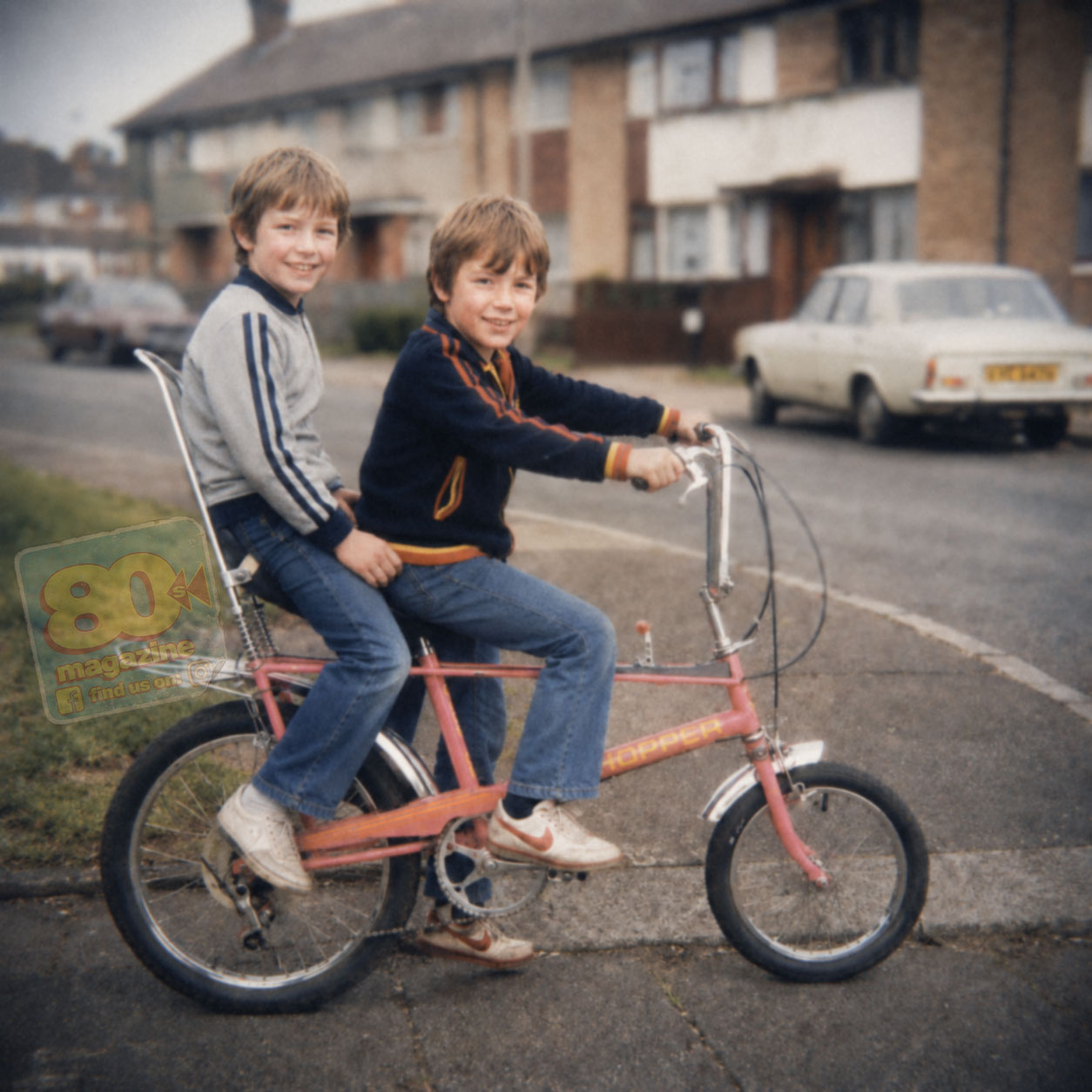
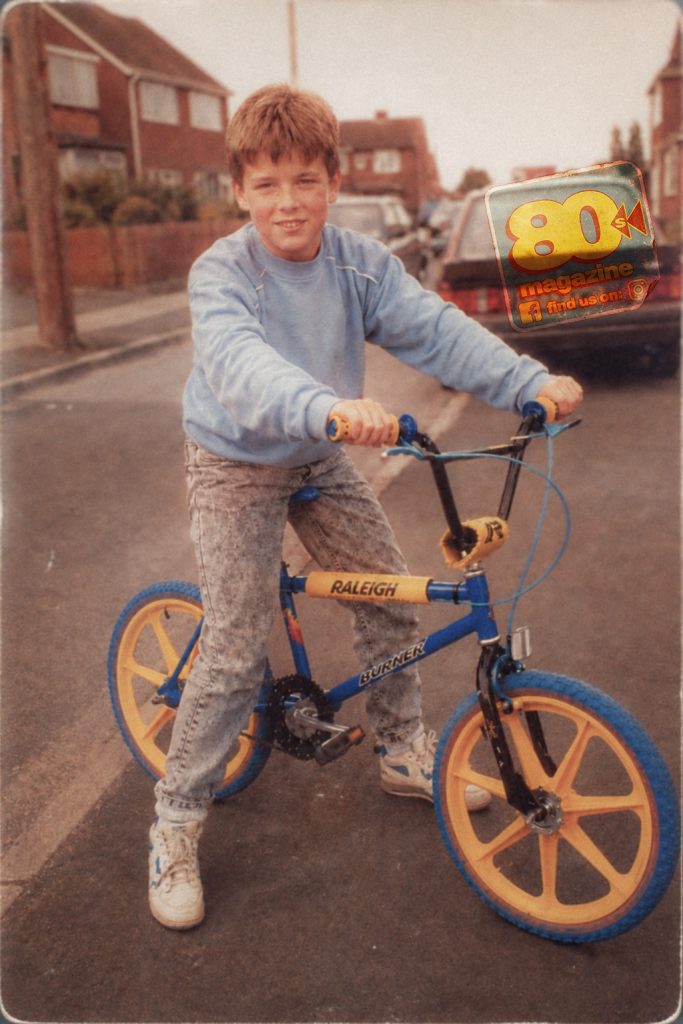
There was a very specific sound to childhood in 1980s Britain: the rattle of a Raleigh Burner going too fast over uneven paving slabs, the scrape of a skateboard with only one decent wheel, and someone shouting, “Go on, you’ll make it!” from the bottom of a hill they had absolutely no medical training to assess.
For 80s kids UK childhood was a strange mix of freedom, danger, imagination and questionable engineering. We built ramps out of warped planks and bricks. We rode bikes with no helmets, no pads, and sometimes no brakes worth trusting. We disappeared for hours with only a vague instruction to “be back before tea.” Nobody tracked us on a phone. Nobody checked whether the homemade go-kart had steering. Nobody seemed overly concerned that three children were trying to jump over a washing basket on a BMX.
And yet, for those who grew up in it, there is a powerful affection for that era. Not because it was perfect. It wasn’t. But because surviving childhood then often meant learning confidence, risk, friendship and resilience in a way that felt gloriously unsupervised.
What A Time To Be Alive
Nostalgia can be a bit dishonest if we let it. It paints everything in warm sunlight and forgets the stitches, grazes, tears and near misses. But looking back at 80s childhoods in the UK isn’t just about saying, “Weren’t we tough?” or “Kids today don’t know they’re born.” That gets boring quickly.
What makes this subject interesting is the contrast. Childhood then was looser. Adults were often nearby, but not hovering. The street, the park, the alley behind the garages and the bit of waste ground near the estate were all part of the landscape. Children tested themselves constantly, often with very little equipment and even less planning.
For many 80s survivors, those memories are funny because they were slightly ridiculous. They are also meaningful because they remind us how children used to create entire worlds from almost nothing.
The Bike Helmet Was Someone Else’s Problem
Ask a group of former 80s kids what protective gear they wore on bikes and the answer is usually laughter.
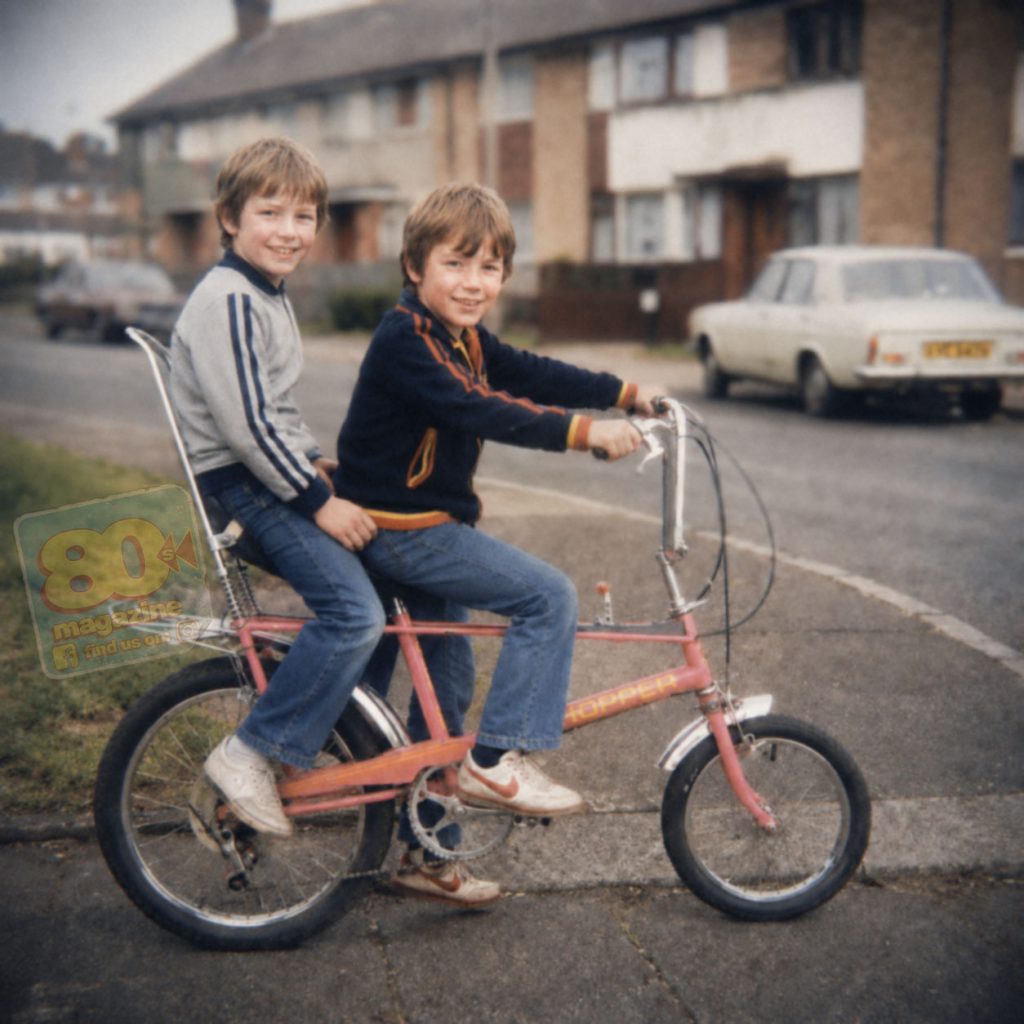
Bike helmets existed, but they were not part of everyday childhood culture for most British kids. You got on your bike and went. If you fell off, you checked whether anyone had seen you before deciding how badly hurt you were.
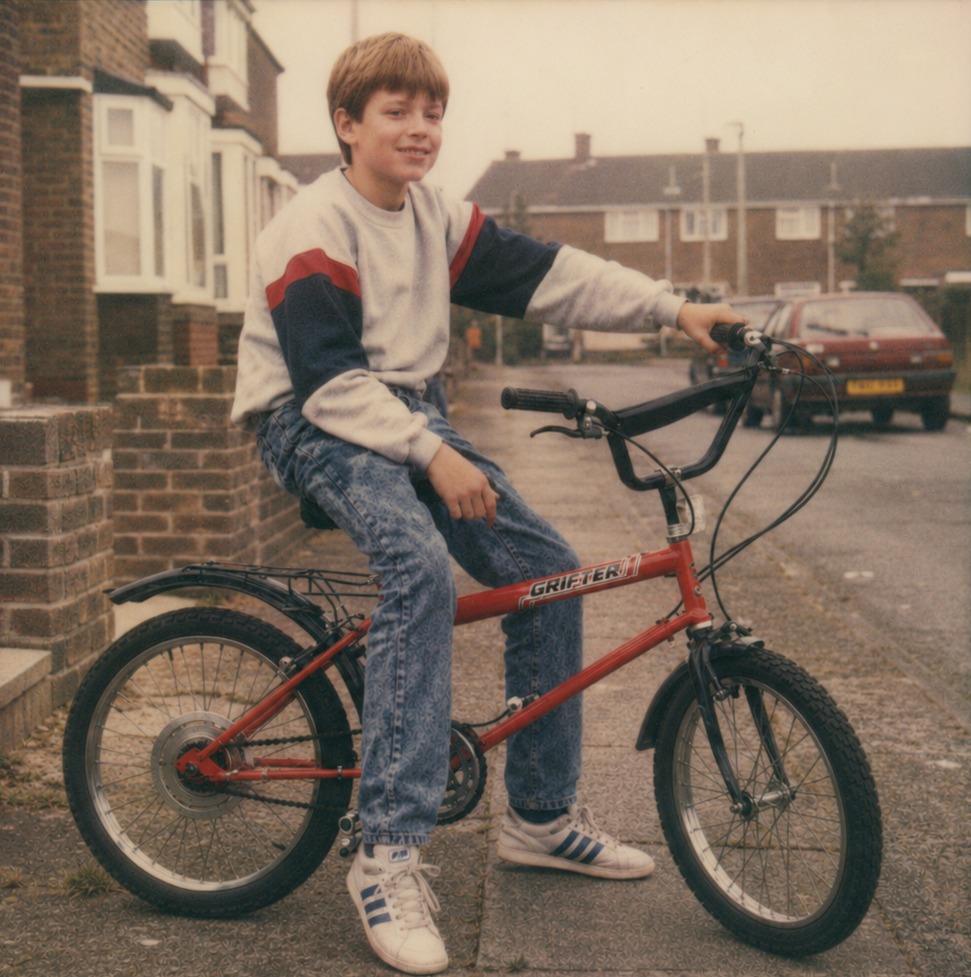
The bike itself might have been a hand-me-down. It might have been too big. It might have had a saddle repaired with electrical tape, one missing reflector, and brakes that worked better in theory than in practice. None of that stopped anyone. If anything, it made the bike feel more yours.
The BMX boom gave 80s kids a new language of danger. Suddenly every kerb was a launch ramp. Every patch of dirt was a track. Every concrete slope behind a block of flats became a test of courage. Children who could barely tighten a wheel nut were suddenly discussing jumps, skids, bunny hops and “massive air” with total authority.
Of course, “massive air” often meant lifting three inches off the ground and landing with a noise that suggested the bike had lost an important part.
Homemade Ramps and the Science of Bad Ideas
There was a particular type of 80s engineering that deserves recognition. It involved a plank of wood, two bricks and complete faith.
The ramp was rarely tested properly. Someone would jump on the plank once, declare it “solid,” and the first rider would pedal towards it as if entering a stadium. The audience was usually three mates, a younger sibling, and possibly a dog that had wandered over.
The ramp might collapse. The bricks might slide. The plank might spring upwards at exactly the wrong moment. But the attempt mattered. If the rider cleared it, they became a legend for at least the rest of the afternoon. If they crashed, they became a different sort of legend.
This was the pattern of surviving childhood in the 80s: somebody invented a stunt, somebody else said it couldn’t be done, and then everyone had to watch while it was attempted with no preparation whatsoever.
It wasn’t only bikes. Skateboards, roller skates, space hoppers, scooters, sledges, go-karts and even old prams were all recruited into service. If it had wheels, it was going down a hill. If it didn’t have wheels, someone would try to add them.
The Homemade Go-Kart Era
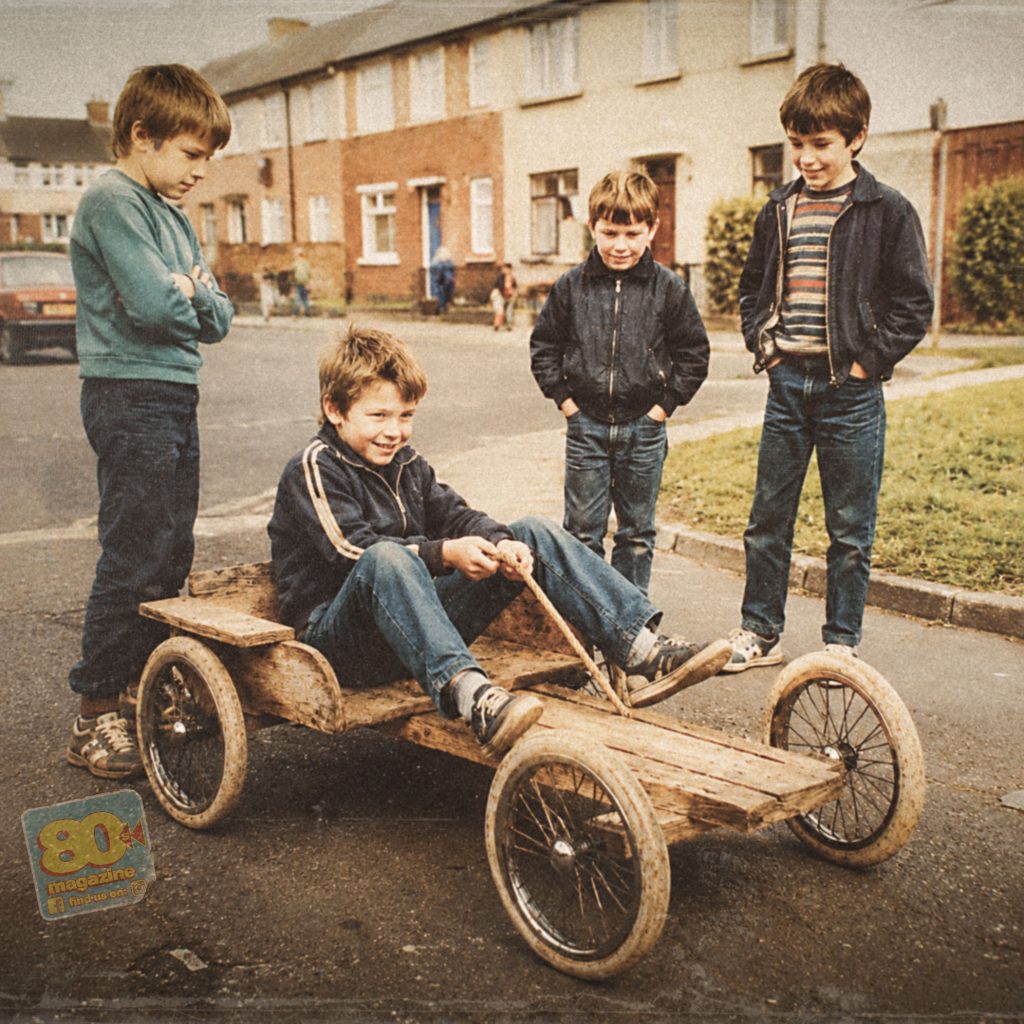
A proper homemade go-kart was a thing of beauty, though not always a thing of safety.
It usually began with a plank or an old bit of board. Add pram wheels, a rope for steering, a couple of nails sticking out at mysterious angles, and you had transport. Not reliable transport. Not insurable transport. But transport.
Steering was optimistic. Braking was normally done with the soles of your shoes, a hedge, or another child. The best go-karts had the look of something built by people who understood the concept of speed but not the consequences of corners.
In some streets, the go-kart was a shared community asset. Nobody owned it for long. It lived in a garage, garden, alleyway or under someone’s stairs. Repairs were made with whatever was available: string, tape, bent screws, bits of Meccano, an old shelf. Its purpose was simple. Get to the top of the steepest nearby path and see what happened.
What happened was often spectacular.
No Phones, No Tracking, Just “Be Back Before Tea”
One of the biggest differences between then and now is how unreachable children were.
A parent might have a general idea where you were. The park. The shops. The rec. Darren’s house. Somewhere near the garages. That was often enough. There were no group chats, no location sharing, no quick texts asking where you’d gone. If plans changed, you just changed them.
That freedom made childhood feel bigger. A ten-minute walk could turn into an expedition. A bit of woodland became a wilderness. A drainage ditch became a forbidden zone. A building site became, very inadvisedly, an adventure playground.
This lack of supervision wasn’t always wise, and it certainly wasn’t risk-free. Some children had too little protection, and not every memory of that freedom is rosy. But for many, the independence was formative. You negotiated with friends. You solved problems. You worked out who was brave, who was reckless, who could be trusted, and who would definitely blame you if things went wrong.
Playgrounds Were Basically Assault Courses
The 80s playground had a different personality. It was made of metal, concrete, splinters and ambition.
Slides were high enough to feel like a serious commitment. Roundabouts spun at speeds that seemed medically questionable. Climbing frames were often built over hard ground, as if the designer had never met a child before. The seesaw could become a weapon in the wrong hands, which was every pair of hands.
Then there were the games. British Bulldog. Kerby. Knock Down Ginger. Red Rover. Wall ball. Football with jumpers for goalposts. None of it required much equipment. Most of it required a willingness to get dirty, argue over rules, and occasionally go home with a scuffed knee and one shoe full of mud.
The surprising thing is how organised children could be without adults. Rules were invented, contested, rewritten and enforced with a seriousness usually reserved for courtrooms. A child could be declared “out,” “not out,” “cheating,” “safe,” or “being a baby” within the space of twenty seconds.
The Myth That Everyone Was Tougher
There is a popular myth that 80s kids were simply tougher. It’s understandable, but not quite right.
Many were not tougher. They were just less observed. A child falling off a bike then probably cried behind a garage, wiped their knee with a sleeve and went quiet for five minutes before rejoining the others. That doesn’t mean it didn’t hurt. It means the social rules were different.
There was also pressure to act fearless. Nobody wanted to be the one who bottled the jump, refused the climb or admitted the hill looked too steep. That pressure created confidence, but it could also push children into daft decisions.
The better lesson isn’t that 80s childhood was superior. It’s that children are capable of more independence than we sometimes allow, but they still need adults who care, notice and set sensible boundaries. The sweet spot sits somewhere between wrapping kids in cotton wool and letting them ride a homemade kart into a nettle patch at thirty miles an hour.
Tiny Details Only 80s Kids Remember
Some memories are almost too specific.
The smell of hot tarmac in summer. The sting of TCP on a cut knee. The shame of being called in for tea just as something exciting was about to happen. The clatter of a football against a garage door. The way one kid always had a puncture repair kit but never the right patch. The mum who would give everyone orange squash, and the other mum who made you stay on the doorstep.
There were also strange little rituals. Putting lolly sticks in bike spokes to make a motorbike sound. Using bread crates as goalposts. Turning cardboard boxes into dens, forts or spacecraft. Making “ramps” out of anything flat enough to rest on something else.
These details matter because they ground the nostalgia. They remind us that 80s childhood was not one big dramatic adventure. It was built from ordinary afternoons that somehow became unforgettable.
What Surviving Childhood Really Taught Us
For all the madness, surviving childhood in the 80s gave many people a few lasting gifts.
It taught resourcefulness. If you didn’t have the right toy, you made something. If the ball went over a wall, you planned a recovery mission. If the chain came off your bike, someone tried to fix it, even if they made it worse.
It taught social confidence. You knocked for friends. You joined games already in progress. You dealt with older kids, younger kids, bossy kids and kids who changed the rules whenever they were losing.
It taught risk judgement, although often through painful research. You learned that wet grass and sharp turns were a poor combination. You learned that gravel was unforgiving. You learned that jumping off a swing looked better in your head than it felt on landing.
Most of all, it taught that childhood could be active, physical and self-directed. Not always safe. Not always fair. But full of movement, invention and stories.
A Meaningful Takeaway for 80s Survivors
The point of looking back is not to recreate every risk. Nobody needs to campaign for children to ride brakeless bikes into traffic or build unstable ramps beside concrete steps.
But there is something worth saving from that era: the permission to explore. The space to be bored. The chance to make things badly before making them better. The trust to go outside and invent a game without an adult organising every minute.
For 80s kids UK memories often sit somewhere between comedy and mild horror. We laugh because we survived things that now seem wildly under-regulated. We wince because some of them genuinely were. Both reactions can be true.
The best version of modern childhood would borrow the imagination, freedom and resilience of the 80s, while keeping the helmets, safer playgrounds and adults who pay attention.
Conclusion
Surviving the 80s in the UK was not about being fearless. Most of us were scared plenty of times. Scared at the top of the hill. Scared halfway up the tree. Scared the moment the plank wobbled and we realised the ramp was a terrible idea.
But we went anyway, or watched someone else go, and the story became part of us.
That is why these memories last. Not because childhood was better in every way, but because it felt handmade. The fun was built from scraps, dares, arguments, bruises, friendships and the glorious certainty that if something had wheels, someone had to find out how fast it could go.
Suggested excerpt:
A warm, funny look back at 80s kids UK childhoods, from homemade go-karts and BMX ramps to no helmets, no phones and the art of surviving childhood.