The Broom Cupboard Years: How Children’s BBC Turned a Tiny Booth Into After School Magic
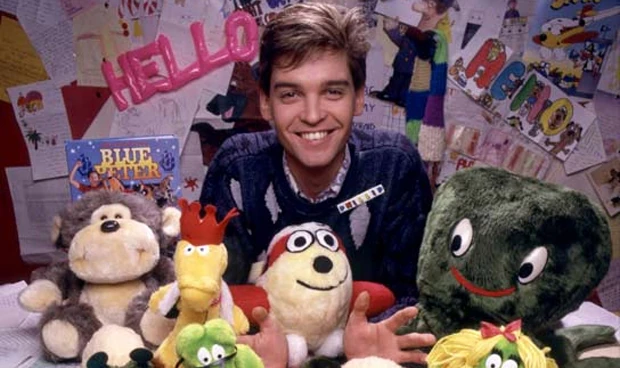
For a lot of British kids, the most important room on television was not a glamorous studio, a spaceship bridge, or the Blue Peter garden. It was a cramped little corner at Television Centre with a desk, a fixed camera, some viewer drawings on the wall, and just enough space for a presenter and whatever chaos happened to be sharing the frame that day. That was The Broom Cupboard, and for years it gave Children’s BBC a personality that felt far bigger than the room itself. It launched on BBC One on 9 September 1985, bringing in-vision continuity to the BBC’s afternoon children’s block and changing the feel of weekday Kids TV in Britain. ([tvark.org][1])
The cleverness of The Broom Cupboard was that it never looked especially clever. It looked makeshift because, in many ways, it was. The presenter was broadcasting from the BBC One continuity booth rather than from a purpose-built children’s studio, which meant the whole thing had a slightly improvised, homemade energy. That turned out to be a strength. It made Children’s BBC feel live, direct, and oddly personal, like someone friendly had grabbed control of the telly just as you got in from school. ([tvark.org][1])
The reason people still talk about The Broom Cupboard is not just nostalgia for old logos, synth stings, or puppet sidekicks. It matters because it changed the relationship between the BBC and its young viewers. Before that 1985 launch, the corporation’s children’s programmes were introduced by off-screen continuity. After it, the afternoon block had a face, a voice, and a sense of shared routine. That sounds small on paper. On screen, it was huge. ([tvark.org][2])
It also arrived at exactly the right moment. Commercial children’s television had already started pushing more personality-led presentation, and the BBC’s answer was not to outgun ITV with something flashier. It did something more memorable. It made a virtue of limitation. A tiny booth became the front door to an entire after-school world, and that world felt live in a way modern on-demand viewing rarely does. For Gen X and older Gen Y viewers, after school TV was not just about the programmes themselves. It was about the space between them. ([tvark.org][1])
The room was tiny, but the idea was big
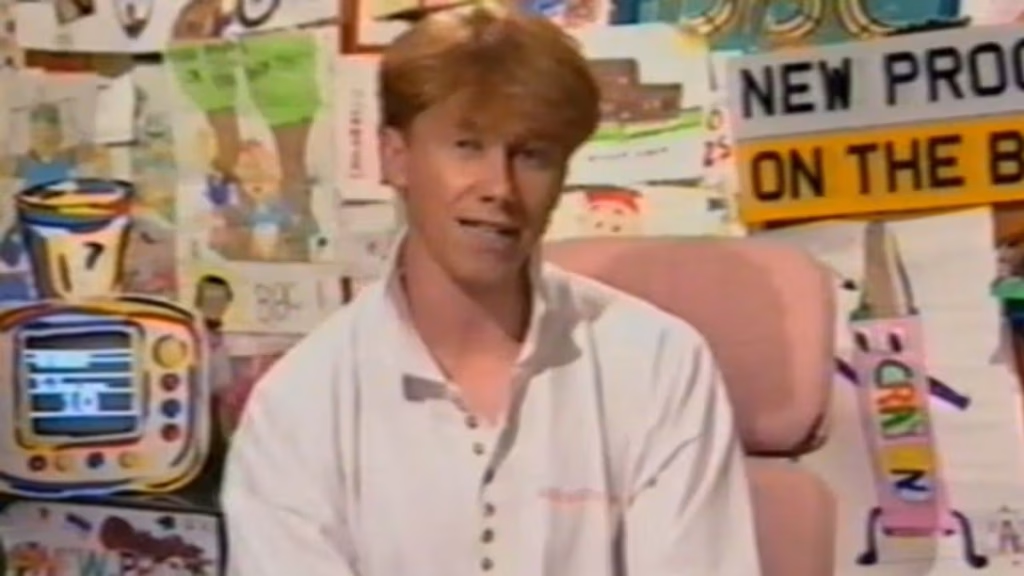
The first thing worth clearing up is a myth. The Broom Cupboard was not some specially designed children’s set that happened to be a bit small. It was, in reality, the BBC One continuity desk: a working booth with a fixed camera, adapted so the presenter could appear in vision between programmes. For years, the host was not just presenting; they were effectively operating in a live transmission environment, partly directing links from the desk itself. That practical constraint is one reason the presentation always felt so immediate. ([tvark.org][1])
That setup gave Children’s BBC a texture you could feel, even if you were eight and had no idea how television worked. There was no distance between the audience and the presenter. You sensed that mistakes could happen because, quite often, they did. Buttons were pressed, timings went wonky, puppets misbehaved, and the whole thing had a slightly seat-of-the-pants quality that made it more alive than polished children’s output often is. It was live TV stripped back to its essentials. ([tvark.org][1])
There is a broader lesson in that. Plenty of children’s television from the 1980s had better sets or bigger ambitions, but not all of it created intimacy. The Broom Cupboard did. It gave the BBC a recognisable home for its afternoon block, and that home felt reachable. It looked like somewhere a real person worked rather than somewhere television executives had over-designed for maximum sparkle. That is a large part of why the memories have lasted. ([The Guardian][3])
The presenters were the point
The programmes mattered, of course, but the presenters were the glue. Phillip Schofield launched the strand in 1985, and the early years established the tone: bright, informal, reassuring, and lightly anarchic. Debbie Flint and Simon Parkin joined the team in 1986, and over time the booth became associated with a run of presenters who each gave the slot a slightly different flavour without breaking the format. ([tvark.org][1])
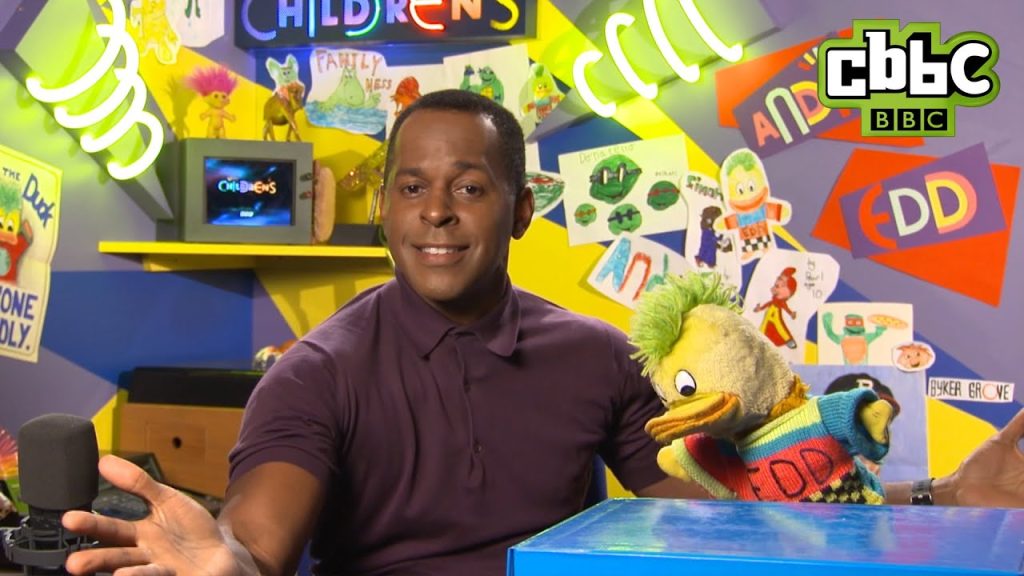
That is one reason people remember Broom Cupboard presenters with unusual affection. They were not quite stars in the normal sense, and they were not authority figures either. They sat in a useful middle ground: older sibling, babysitter, co-conspirator. Andy Crane brought a warm radio confidence and became deeply associated with the late-80s period. Simon Parkin had a more easygoing style. Andi Peters gave the strand a jolt of cheeky energy in the early 1990s. Later on, presenters such as Philippa Forrester and Toby Anstis helped bridge the final stretch before the format changed for good. ([thebroomcupboard.co.uk][4])
That matters because Kids TV lives or dies on tone. Children are ruthless about forced jollity. The Broom Cupboard generally avoided it. The presenters were lively, but they usually felt like themselves. They did not talk down to the audience. They talked across to them. That makes a difference, and it is one reason The Broom Cupboard still feels warmer in memory than many bigger, shinier shows from the same era. ([Den of Geek][5])
Gordon, Edd, and the gentle art of controlled chaos
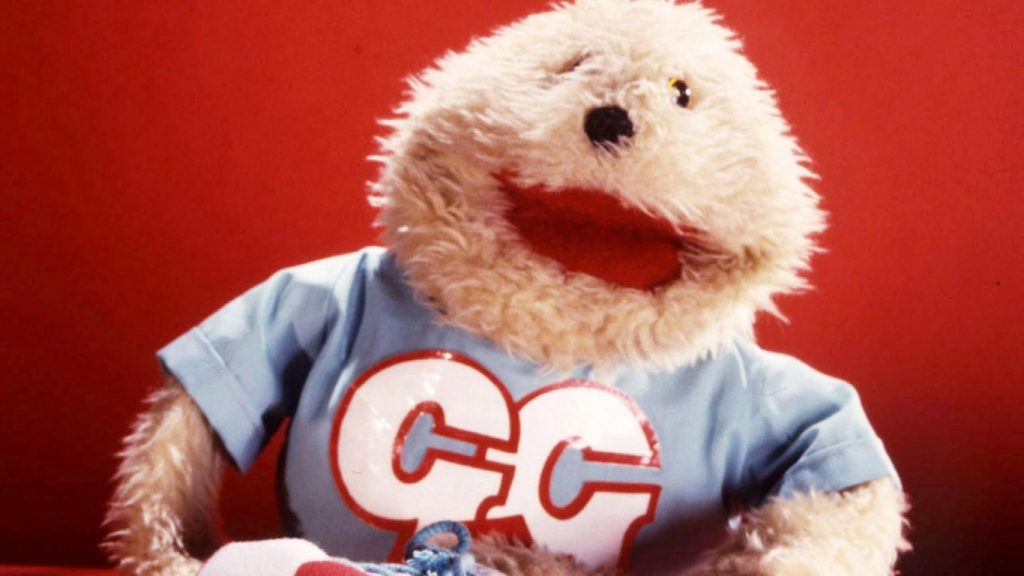
You cannot really write about The Broom Cupboard without writing about the puppets. Gordon the Gopher first appeared with the launch of CBBC in 1985 and quickly became inseparable from the early Schofield years. He was a squeaking, red-pawed gopher who sat in that tiny booth and helped turn continuity links into miniature double acts. When Schofield moved on to Going Live! in 1987, Gordon went too. ([National Science and Media Museum][6])
There is a lovely bit of behind-the-scenes detail here. The Science Museum Group notes that one of Gordon’s original leather jackets in its collection was donated by Adam Ant, which tells you almost everything you need to know about how completely the character had escaped the limits of a small children’s continuity booth. Gordon was not just filler between shows. He was merch, mythology, and mischief. ([National Science and Media Museum][6])
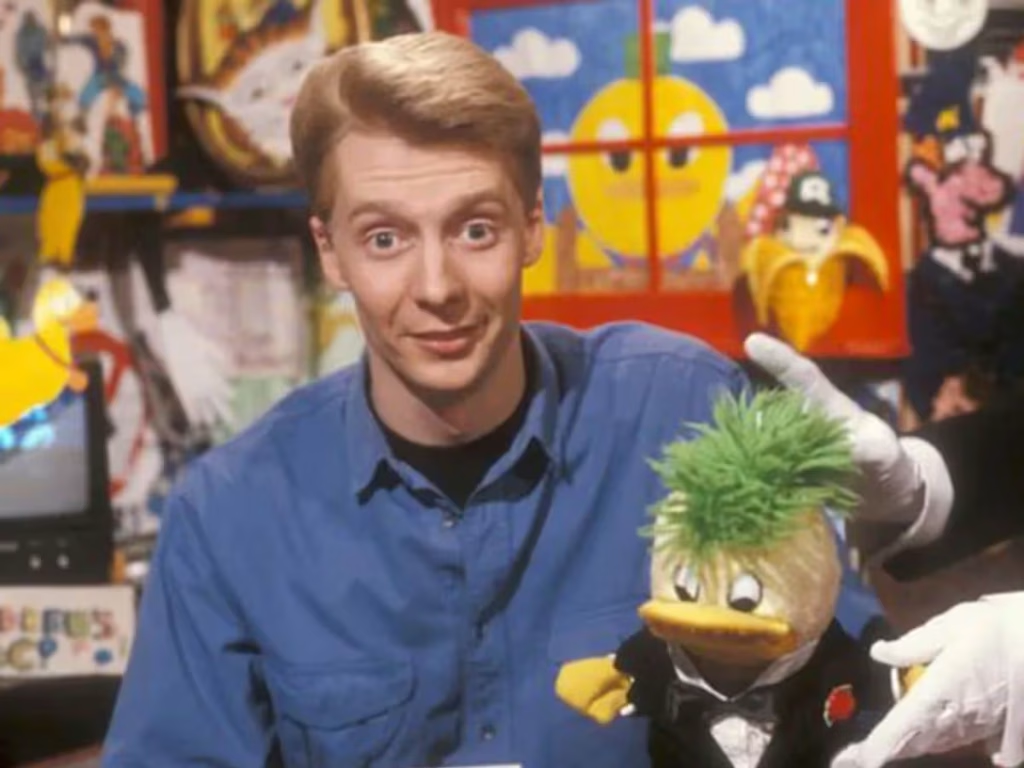
Then came Edd the Duck, Andy Crane’s great sidekick and, for many viewers, the defining Broom Cupboard character. According to puppeteer Christina Brown, Edd began when she bought a duck head from a Hong Kong street market and popped it up on air as a joke. His trademark green mohican came later, apparently made from leftover material from Blue Peter punk teddy bears. That is exactly the sort of gloriously improvised detail that fits The Broom Cupboard perfectly: homemade, daft, and somehow unforgettable. ([The Guardian][7])
Edd also captures something essential about Children’s BBC in that era. The puppet was mischievous, a little rude, and never entirely under control, but the anarchy stayed playful rather than cynical. Wilson the Butler, Ratz, and later Otis the Aardvark all extended that sense that the booth had its own internal universe. You tuned in for the cartoons and dramas, but you stayed for the running gags, petty feuds, and strange bits of live business that could only belong to this one odd corner of the BBC. ([Wikipedia][8])
Why after school TV felt like an event
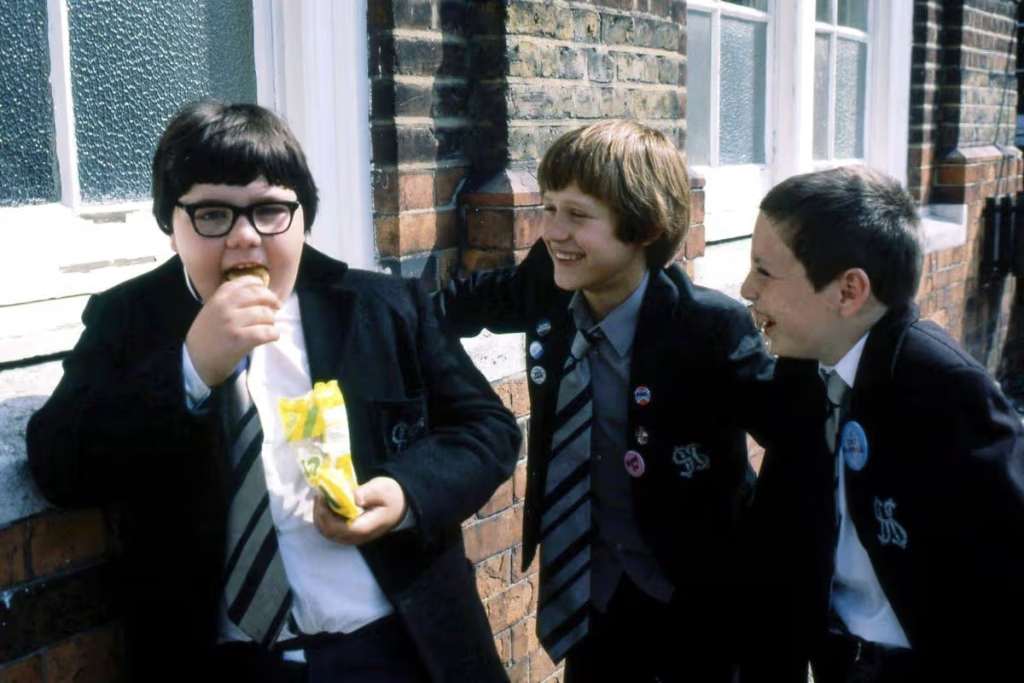
The Broom Cupboard worked because it understood a child’s day better than many children’s brands do now. It arrived in that strange patch between school and evening: not quite free time, not quite family time, a little tired, a little hungry, often still in uniform. The presenter’s job was to ease you through that transition. In practical terms they were linking programmes. In emotional terms they were setting the mood of the afternoon. ([Den of Geek][5])
That is why the slot often feels bigger in memory than the room it came from. It was the gateway to everything else: imported cartoons, homegrown drama, magazine shows, birthday cards, competitions, silly songs, occasional disasters, and the daily rhythm of after school TV. If you were there for Children’s BBC, you were not just watching separate programmes. You were entering a block that had its own voice and pace. ([tvark.org][2])
It also had proper regional quirks. One of the more overlooked details, fondly remembered by viewers, was the daily sign-off to Northern Ireland at around 5.05pm. As Den of Geek notes, that was because Northern Ireland aired regional news before the main evening news and scheduled Neighbours an hour later than the rest of the UK. For children elsewhere, it was one of those tiny recurring mysteries that made television feel wonderfully specific to time and place. ([Den of Geek][5])
Broom Cupboard Moments
The Broom Cupboard was full of odd little rituals that would sound invented if they were not so well remembered. One of the best is National Willy Fog Day. During Andy Crane’s era, Around the World With Willy Fog became such a fixture that the theme tune turned into a Broom Cupboard singalong. To mark the end of the run in 1988, viewers were invited to send off for lyric sheets and celebrate the occasion, and the response was strong enough that extra help had to be drafted in for the mail-outs. It is absurd, charming, and very revealing: a continuity booth had somehow become a national clubhouse. ([Den of Geek][5])
Another great example is how often the strand spilled over into the rest of pop culture. The Broom Cupboard did not just introduce programmes; it created mini-events around them. Theme tunes became shared jokes. Imported cartoons became collective obsessions. Novelty songs found airtime. Segments that were little more than viewers sending in photos or drawings somehow became memorable because the presenters sold them so wholeheartedly. That enthusiasm was rarely ironic, and that helped. Kids can tell the difference between someone committing to a silly idea and someone smirking at it. ([Den of Geek][5])
And then there is the behind-the-scenes reality of the puppets themselves, which says a lot about the era. Paul Smith recalled operating Gordon from just out of shot in the continuity suite, while Christina Brown described washing and repairing Edd herself when needed because there was only one of him. That level of practical, hands-on television craft gave the whole enterprise a texture that modern digital presentation often lacks. It was not pristine. It was handmade. ([The Guardian][9])
The end of the Broom Cupboard years
By 1994, Children’s BBC had outgrown the literal booth. TVARK records that in September that year the strand moved into Pres A, a larger presentation space previously used for some school holiday output. That shift meant presenters no longer had to operate the broadcast equipment themselves, and the whole look of the strand became more expansive. In one sense, that was progress. In another, it marked the end of the true Broom Cupboard era. ([tvark.org][10])
The brand kept evolving. TVARK notes that Children’s BBC was rebranded as CBBC in 1997, and the BBC later split its children’s services into separate digital channels. The launch date for CBBC and CBeebies was set for 11 February 2002, with CBBC aimed at roughly six to thirteen-year-olds and CBeebies focused on preschool viewers. By then, the old continuity booth belonged to television history rather than daily life. ([tvark.org][11])
Still, the move into a bigger studio and then into dedicated channels did not erase what came before. If anything, it confirmed how important those earlier years had been. Modern CBBC may be a broader, more formal brand, but the emotional template was set in that original tiny booth: direct address, presenter personality, live spontaneity, and the sense that children deserved presentation made especially for them rather than just programmes dumped into a schedule. ([tvark.org][2])
What The Broom Cupboard still gets right
The practical takeaway from The Broom Cupboard is surprisingly current. Great children’s television does not begin with budget, scale, or branding decks. It begins with trust in the audience and a clear sense of tone. The Broom Cupboard respected children enough to be live, specific, and slightly unpredictable. It knew that routine could be comforting without becoming bland, and that mischief works best when it feels genuine rather than focus-grouped. ([The Guardian][3])
It is also a useful reminder for anyone writing about media history: the most important part of a television institution is not always the flagship programme. Sometimes it is the connective tissue. Sometimes it is the person who says hello, tells you what is coming next, laughs when something goes wrong, and makes the whole schedule feel like it belongs to you. That is what The Broom Cupboard did for a generation of viewers raised on Children’s BBC, CBBC, Kids TV, and the rituals of after school TV. ([tvark.org][1])
Conclusion
The Broom Cupboard should not have been as important as it was. It was too small, too scrappy, too limited, too obviously built out of BBC practicality rather than grand vision. And yet that is exactly why it worked. It turned continuity into companionship. It made a national broadcaster feel local, friendly, and a bit chaotic. Most of all, it understood that childhood television is not only about the big shows people remember years later. It is also about the feeling of arriving home, switching on, and being welcomed into a world that already seemed to know you were there. ([tvark.org][1])
[1]: https://tvark.org/branding/bbc/cbbc/cbbc-1985 "Children’s BBC 1985 – 1987 Branding | TVARK"
[2]: https://tvark.org/branding/bbc/cbbc "CBBC | TVARK"
[3]: https://www.theguardian.com/tv-and-radio/2020/sep/09/back-to-the-broom-cupboard-the-best-from-35-years-of-cbbc?utm_source=chatgpt.com "Back to the broom cupboard: the best from 35 years of CBBC"
[4]: https://thebroomcupboard.co.uk/presenterlist.html?utm_source=chatgpt.com "An Unofficial History Of Children's BBC ... - BROOM CUPBOARD"
[5]: https://www.denofgeek.com/tv/cbbc-s-broom-cupboard-brilliant-childhood-memories/ "CBBC’s Broom Cupboard at 35: Memorable Childhood Moments | Den of Geek"
[6]: https://www.scienceandmediamuseum.org.uk/objects-and-stories/history-british-childrens-tv "History of British children’s TV | National Science and Media Museum"
[7]: https://www.theguardian.com/stage/2020/jun/14/whatever-happened-to-gordon-the-gopher-and-all-the-other-tv-puppets "Pulling the strings: meet the people who brought puppets to life | Puppetry | The Guardian"
[8]: https://en.wikipedia.org/wiki/CBBC_Puppets "CBBC Puppets - Wikipedia"
[9]: https://www.theguardian.com/stage/2020/jun/14/whatever-happened-to-gordon-the-gopher-and-all-the-other-tv-puppets?utm_source=chatgpt.com "Pulling the strings: meet the people who brought puppets ..."
[10]: https://tvark.org/branding/bbc/cbbc/cbbc-1994 "Children’s BBC 1994 – 1997 Branding | TVARK"
[11]: https://tvark.org/c/branding/bbc/cbbc/page/4 "CBBC | TVARK"