Knight Rider: Why the TV Franchise Still Owns a Piece of 80s Pop Culture
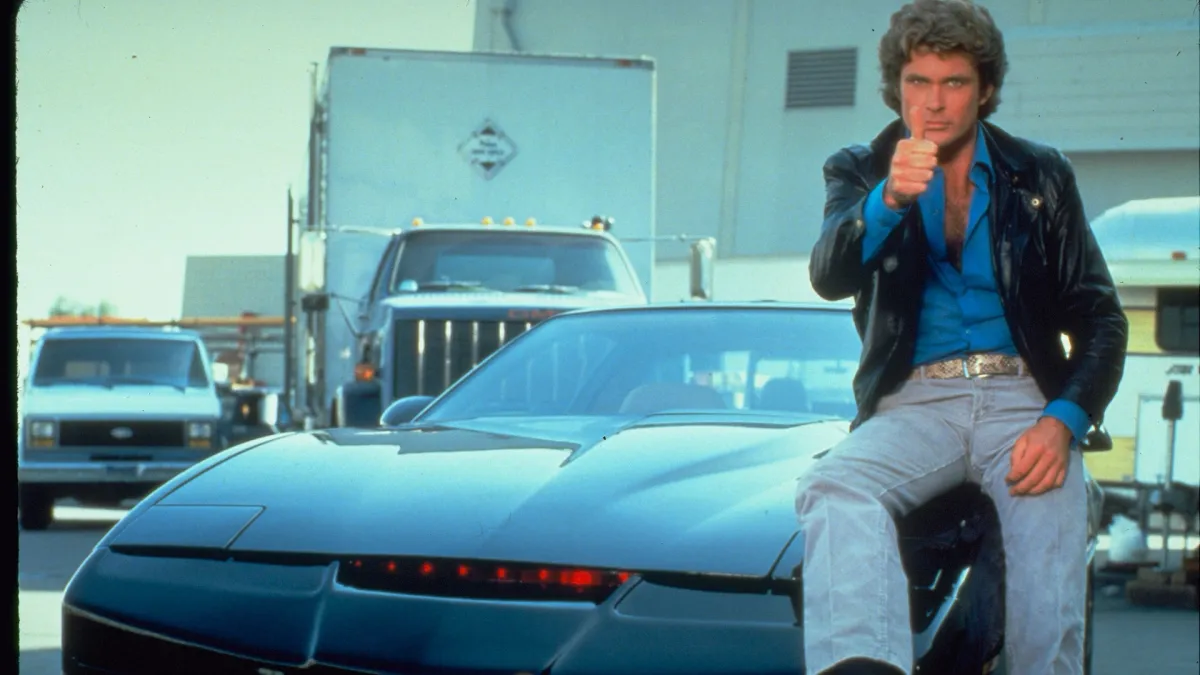
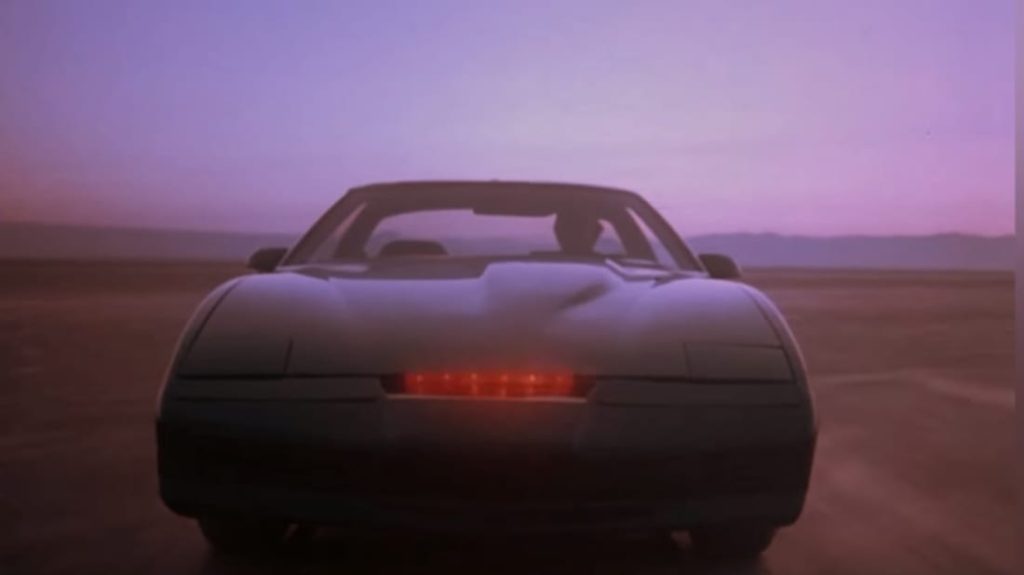
There are bigger 80s TV hits. There are grittier action shows, better written dramas, and comedies with sharper jokes. Yet Knight Rider has a strange staying power that a lot of “better” shows never managed. Mention it now and most people do not start with a plotline or a villain. They picture that red scanner light sweeping across the nose of a black Pontiac Trans Am, hear KITT’s cool voice, and remember a version of the future that felt exciting rather than cold. The original Knight Rider aired on NBC from September 26, 1982, to April 4, 1986, ran for four seasons and 90 episodes, and turned David Hasselhoff and a talking car into one of the most recognisable pairings in television. ([Wikipedia][1])
What makes the franchise interesting is not just that the original show was a hit. It is that Knight Rider kept trying to come back. There was the 1991 TV movie Knight Rider 2000, the late-90s spin on the idea in Team Knight Rider, and the 2008 NBC reboot with a new KITT and a new lead tied to Michael Knight’s legacy. That long tail tells you something important: this was never just a car show. It was a clean, portable idea that producers kept believing could work again. ([Wikipedia][2])
Why Knight Rider matters
Part of the reason Knight Rider still matters is that it sits right at the crossroads of several things people remain nostalgic about: optimistic futurism, practical TV stunt work, synth-heavy 80s style, and a kind of heroism that now feels almost quaint. Michael Knight did not brood much. KITT was advanced, but not dystopian. The show imagined technology as a partner, not a threat. That helps explain why the franchise has aged better in memory than some supposedly tougher, more “serious” contemporaries. ([Wikipedia][1])
It also mattered in the real television landscape of the time. Britannica notes that Knight Rider helped ease NBC out of third place in the first half of the 1980s. That is a bigger achievement than it sometimes gets credit for. In other words, this was not just a cult oddity people rediscovered later. For a stretch, it was part of the machinery of mainstream American TV, and that helps explain why Gen X and older Gen Y viewers still carry it around in their heads so vividly. ([Encyclopedia Britannica][3])
How Knight Rider found its formula
Glen Larson’s simple but durable idea
Glen A. Larson understood broad, accessible television better than many critics gave him credit for. One of the smartest descriptions of Knight Rider is also the simplest: Larson said he wanted to do “The Lone Ranger with a car,” a sci-fi concept with the soul of a western. That is exactly what the series feels like once you strip away the gadgets. Michael Knight rolls into a place where ordinary people are being intimidated by crooks, corruption, or local power brokers. He investigates, stirs things up, and leaves after restoring some kind of order. ([Hagerty UK][4])
That formula matters because it explains why the show never needed especially complicated mythology to work. In the pilot, Michael Long is nearly killed, rebuilt as Michael Knight, and partnered with KITT through the Foundation for Law and Government. After that, the series mostly trusts the weekly mission structure. A lot of 80s TV worked that way, but Knight Rider had one huge advantage over many of its peers: its concept could be explained in a sentence, and remembered for decades. ([Wikipedia][1])
David Hasselhoff was only half the act
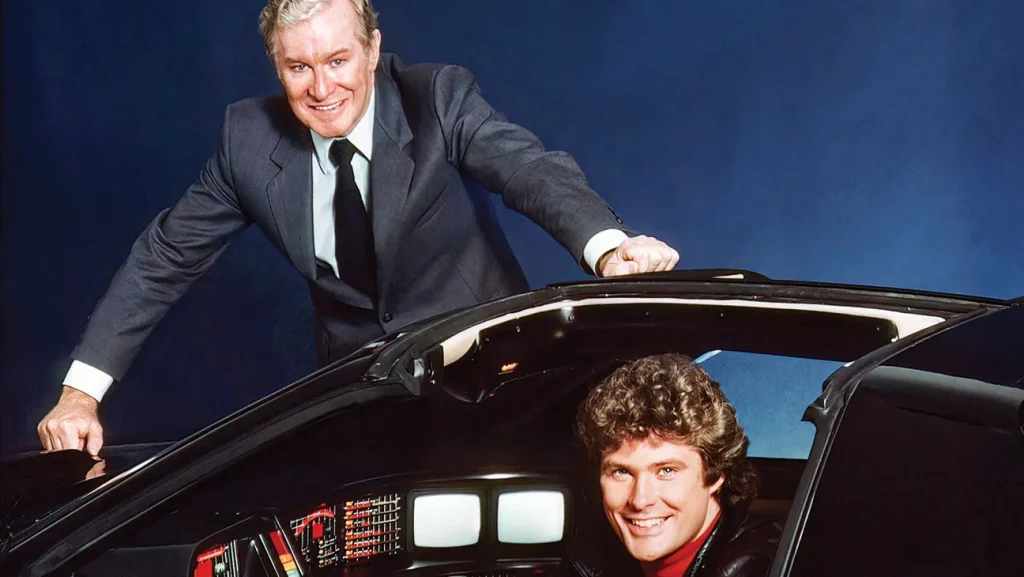
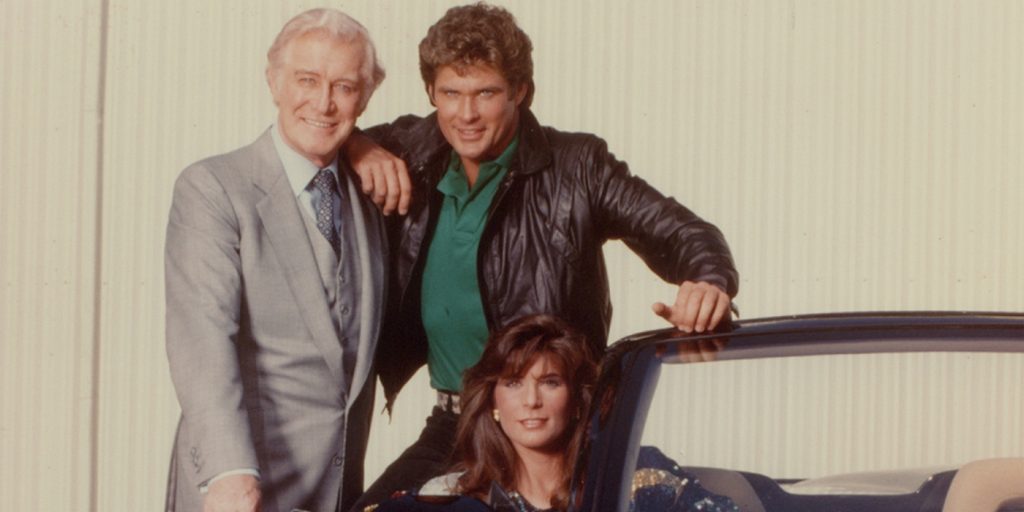
It is easy now to treat David Hasselhoff as the whole brand, because his image became so bound up with the series. But the original Knight Rider works because Michael Knight is not a lone star vehicle in the usual sense. He is the warm, human half of a two-character engine. KITT is the other half: dry, capable, slightly superior, occasionally exasperated, and often funnier than people remember. Larson later described Michael and KITT as a comedy team, and that is a useful lens. The show is action-adventure, yes, but its chemistry lives in the back-and-forth. ([Autoweek][5])
That balance is also why KITT never feels like a mere prop. William Daniels voiced KITT, and one lovely bit of behind-the-scenes trivia is that he initially asked not to be credited. He recorded his lines after much of an episode had already been shot, while Hasselhoff performed opposite an off-camera assistant or heard KITT’s dialogue through the car stereo during moving scenes. In many shots where Michael appears to be driving and chatting naturally, the vehicle was actually being towed. The illusion is seamless enough that most viewers never think about it. ([Wikipedia][1])
KITT, the Trans Am, and why the car became the icon
The car was futuristic, but still believable
KITT was officially the Knight Industries Two Thousand, but for most viewers he was simply that black Trans Am that looked unlike anything else on television. That mattered. The original KITT was based on a 1982 Pontiac Firebird Trans Am, which gave the show a perfect foundation: sleek enough to look futuristic, but still recognisably a road car you might actually dream of owning. That mix of fantasy and plausibility is one reason KITT lodged so deeply in the culture. He was high-tech, nearly indestructible, full of impossible abilities, yet still close enough to a real production car to feel touchable. ([Wikipedia][1])
There is also a common misconception worth clearing up. George Barris is often casually credited with “creating KITT,” but the story is more specific than that. Automotive and enthusiast coverage has repeatedly pointed to Michael Scheffe as the key designer behind the original hero car’s nose, dash, and interior, while Barris’s shop became more important later for specialty versions such as the convertible and Super Pursuit Mode cars. That distinction may sound nerdy, but it tells you a lot about how TV legend gets simplified over time. Fans remember a single iconic machine; the production reality was a more complicated piece of collaborative craft. ([HOT ROD][6])
KITT felt like tomorrow before “smart tech” was normal
One reason Knight Rider still lands with nostalgia nerds is that KITT predicted a kind of consumer-tech intimacy long before most people had even seen a home computer in regular use. Voice interaction, navigation help, scanning systems, remote communication, responsive displays, even the fantasy of a machine that understood you and answered back with personality: that all feels much less fanciful now than it did in 1982. Back then, KITT was magic. Seen now, he feels like a charming ancestor of the voice assistants and connected tech people live with every day. ([Wikipedia][1])
That does not mean the show was prophetic in a hard science-fiction sense. It was still pulpy, cheerful fantasy. But it framed technology in a way that modern culture often forgets how to do. KITT was not there to replace Michael Knight. He amplified him, argued with him, protected him, and occasionally punctured his ego. That human-machine relationship is the emotional centre of Knight Rider, and it is a big reason the franchise still feels oddly warm. ([Autoweek][5])
The wider Knight Rider franchise
Knight Rider 2000: the revival that nearly became more
The first major return came with Knight Rider 2000 in 1991. On paper, it looked like a straightforward TV movie sequel. In reality, it was part of a bigger attempt to revive the property. Reporting around the production history shows that David Hasselhoff suggested a run of Knight Rider movies-of-the-week, but NBC ultimately only ordered one, which effectively killed that version of the comeback before it could become a regular thing. That gives the film a slightly melancholy place in franchise history: it is less a triumphant new chapter than a glimpse of a path not taken. ([Wikipedia][7])
That TV movie also shows a pattern the franchise would never quite solve. The brand clearly had value, but the farther it moved from the stripped-back Michael-and-KITT dynamic, the shakier it became. More futurism did not automatically mean more fun. Bigger concept does not always beat cleaner concept. ([Wikipedia][7])
Team Knight Rider: the idea gets busier
Team Knight Rider arrived in 1997 and ran a single syndicated season of 22 episodes. It replaced the original one-man-and-one-car structure with a five-person team, each paired with a different high-tech vehicle. You can see the logic. Late-90s action TV was more ensemble-driven, and producers were trying to stretch the format. But in doing so, the show moved away from the simplicity that made the original work. ([Wikipedia][8])
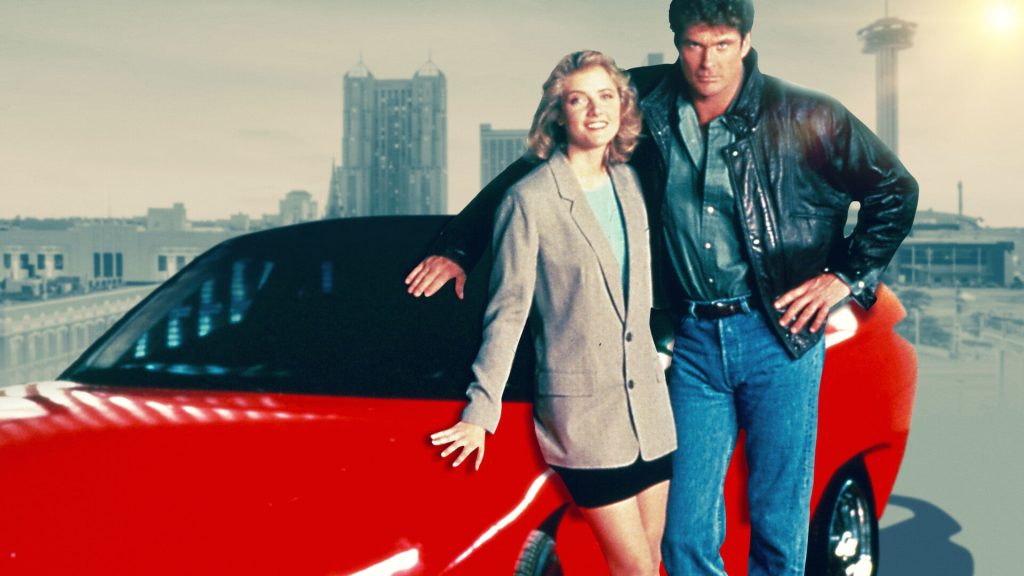
That does not make Team Knight Rider worthless. Franchise oddities can be fascinating in their own right, especially for fans who enjoy seeing how a familiar idea is reshaped by a different television era. But it is telling that even sympathetic summaries tend to note how strongly comparisons to the original worked against it. Knight Rider could survive stylistic updates. What it struggled to survive was dilution. ([Wikipedia][8])
The 2008 reboot: modern hardware, less magic
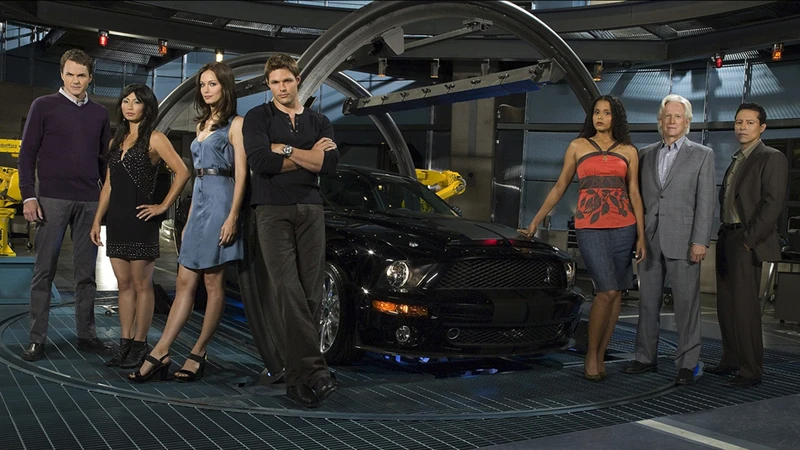
NBC tried again in 2008 with a reboot that connected its lead, Mike Traceur, to Michael Knight and introduced a new KITT, the Knight Industries Three Thousand. This time KITT was voiced by Val Kilmer and based on a Ford Mustang Shelby GT500KR rather than a Trans Am. The series premiered on September 24, 2008, ended on March 4, 2009, and was canceled after one season. ([Wikipedia][9])
The 2008 version is interesting because it reveals what can happen when a franchise updates the surfaces more successfully than the soul. The newer KITT could transform, the production was slicker, and the show was obviously trying to match a different era’s taste for serialized action and tech-heavy spectacle. But a cleaner car and bigger toolkit were not enough. The original Knight Rider felt playful. The reboot often felt as though it knew it had to justify itself. Those are not the same thing. ([Wikipedia][9])
Lesser-known details that make the franchise richer
One of my favourite details about Knight Rider is that the show’s production tricks were often much humbler than the futuristic fantasy on screen. KITT’s dialogue was added later. Hasselhoff frequently acted opposite a stand-in voice feed. The car was often towed. That old television craft is part of the charm. The series sold an advanced AI fantasy with techniques that were practical, mechanical, and very analog behind the camera. ([Wikipedia][1])
Another overlooked point is how much the show’s reputation improved after its original run. Contemporary critics were not especially kind, but retrospective opinion softened as the series settled into cult status. That is common with genre television, especially 80s TV, but Knight Rider is a strong example of it. Detached from the pressure of being “serious” prime-time entertainment, the series could finally be appreciated for what it actually was: a stylish, sincere, hugely watchable fantasy adventure. ([Wikipedia][1])
And then there is the backdoor-pilot weirdness that old network TV used to love. The two-part Knight Rider episode “Mouth of the Snake” spun off into Code of Vengeance, one of those franchise side trails that reminds you just how aggressively networks once tried to expand anything with momentum. It never became a major pillar of the brand, but it is part of the franchise story and worth knowing if you enjoy the industrial history of television as much as the shows themselves. ([Wikipedia][2])
Practical takeaway: how to revisit Knight Rider now
If you want to understand why Knight Rider endures, start with the original series and do not overcomplicate it. Watch the pilot, Knight of the Phoenix, because it gives you the whole engine of the franchise in one go: the rebirth of Michael Long as Michael Knight, the mission-driven format, Devon Miles as the straight-faced authority figure, and KITT as both weapon and personality. Then dip into season one and season two before chasing later add-ons. The original run is the text; everything else is commentary. ([Wikipedia][1])
After that, the smartest way to explore the rest of the franchise is with curiosity rather than completionism. Knight Rider 2000 is interesting as a failed bridge to a bigger revival. Team Knight Rider is a curiosity from a more ensemble-minded era. The 2008 reboot is worth a look if you want to see how television tried to modernise KITT for a post-Fast & Furious, post-24 audience. But if you are chasing the real heart of Knight Rider, you come back to the original Michael, the original KITT, and that black Trans Am every time. ([Wikipedia][7])
Conclusion
What keeps Knight Rider alive is not just nostalgia for old cars, old synth music, or David Hasselhoff’s hair. It is that the franchise captured a very specific kind of pop-cultural wish: the idea that technology could be clever, stylish, loyal, and just plain fun. Glen Larson built a durable television myth out of a simple heroic template. KITT gave it personality. The Pontiac Trans Am gave it shape. The later spin-offs and reboots never quite matched the original spark, but they do prove how strong the original idea was. Some franchises survive because they keep evolving. Knight Rider survives because, at its best, it got the formula right the first time. ([Hagerty UK][4])
Sources
[1]: https://en.wikipedia.org/wiki/Knight_Rider_%281982_TV_series%29 "Knight Rider (1982 TV series) - Wikipedia"
[2]: https://en.wikipedia.org/wiki/Knight_Rider?utm_source=chatgpt.com "Knight Rider"
[3]: https://www.britannica.com/topic/Knight-Rider?utm_source=chatgpt.com "Knight Rider | American television program"
[4]: https://www.hagerty.co.uk/articles/lights-camera-action-how-many-of-these-20-tv-cars-do-you-remember/?utm_source=chatgpt.com "Lights, camera, action! How many of these 20 TV cars do ..."
[5]: https://www.autoweek.com/car-life/classic-cars/a33369473/knight-rider-doc-answers-all-your-kitt-questions/?utm_source=chatgpt.com "'Knight Rider' Doc Answers All Your KITT Questions"
[6]: https://www.hotrod.com/news/1982-pontiac-trans-am-part-2?utm_source=chatgpt.com "1982 Pontiac Trans Am: Part 2"
[7]: https://en.wikipedia.org/wiki/Knight_Rider_2000?utm_source=chatgpt.com "Knight Rider 2000"
[8]: https://en.wikipedia.org/wiki/Team_Knight_Rider?utm_source=chatgpt.com "Team Knight Rider"
[9]: https://en.wikipedia.org/wiki/Knight_Rider_%282008_TV_series%29 "Knight Rider (2008 TV series) - Wikipedia"